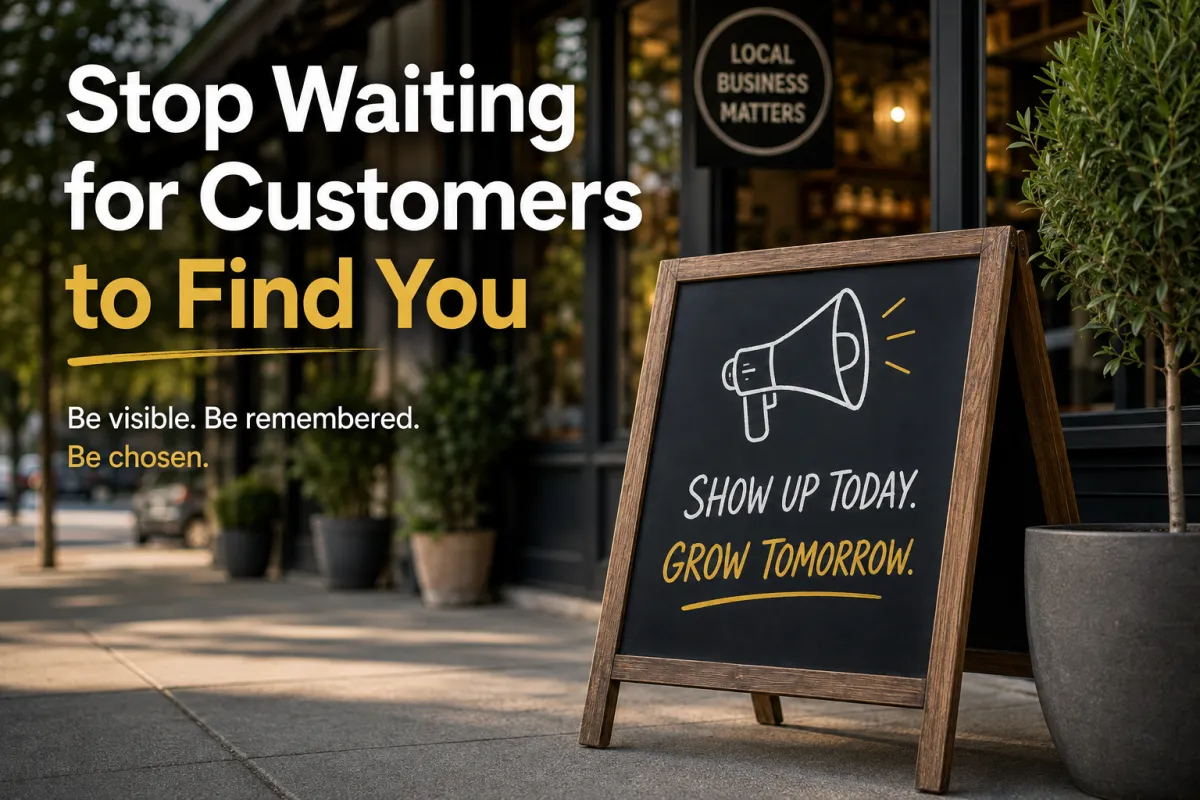
Stop Waiting for Customers to Find You

Many small businesses operate on a simple plan: “Hopefully, someone calls today.”
Unfortunately, hope doesn't create predictable growth. A great business can deliver excellent service, have satisfied customers, and still struggle to generate a steady flow of new enquiries.
Businesses that grow consistently don't wait for opportunities. They create them. They actively place their business in front of potential customers before those customers begin searching. That's the difference between reactive and proactive marketing.
Being good at what you do is essential, but it is only one part of the customer journey. If people don't know you exist, don't remember your name, or can't easily find and trust you when they need you, your quality may never get the chance to win the sale.
Being the Best Isn't Enough If Nobody Knows
One of the most frustrating situations for a business owner is knowing that the company could genuinely help more people, yet watching competitors win the attention and enquiries.
This is where many owners make a critical mistake: they assume the market will naturally recognize quality. It usually doesn't. Customers rarely have enough information to objectively identify the “best” business before they buy. Instead, they tend to choose from the businesses they notice, remember, understand, and trust.
That is why visibility matters. Your marketing doesn't have to shout that you're the best. It needs to make a clear case for why the right customer should notice you, learn more about you, and take the next step.
For a deeper look at this problem, see our article, Why Being the Best Business Doesn't Guarantee More Customers.
Reactive Marketing Creates Peaks and Valleys
If you only market when business slows down, your results will usually follow the same pattern.
Busy month. Quiet month. Busy month. Quiet month.
This cycle creates stress, unpredictable cash flow, and rushed decisions. When enquiries fall, marketing suddenly becomes urgent. The business posts more often, sends an email, runs an offer, or starts contacting prospects. Then, when business picks up again, marketing gets pushed aside.
The problem is that marketing does not work like a light switch. Visibility, familiarity, trust, and demand often build over time. Stopping and starting interrupts that process.
Consistent marketing smooths out those highs and lows by keeping your pipeline active. Instead of asking, “How do we get customers this week?” you begin asking, “How do we make sure enough potential customers know us over the next 30, 60, and 90 days?”
Your Future Customers Are Everywhere
Right now, someone in your local community is planning to hire a service you provide. They may not need it today. But they will soon.
The question is simple: Will they remember your business when the time comes?
If you've been consistently visible, the answer is much more likely to be yes. They may have seen your post, read your article, noticed your Google Business Profile, heard your name at a networking event, or been referred by someone they trust.
They may not contact you immediately. That's okay. The goal is to become familiar before the buying moment arrives.
This is one reason businesses should think beyond immediate lead generation. Some of today's marketing activity is creating tomorrow's enquiries.
Marketing Creates Opportunities Before Demand Exists
Many purchases are not emergencies. People often spend weeks—or months—considering contractors, landscapers, accountants, financial advisers, or marketing companies.
During that period, customers are building a shortlist. They are asking questions, comparing options, checking reviews, looking at websites, scanning social media, and deciding which businesses appear credible.
By staying visible throughout that period, you increase the chances of becoming their first choice when they're ready.
This is also why your marketing should answer questions before prospects ever contact you. Educational blog content, useful social posts, case studies, FAQs, testimonials, and clear service information can reduce uncertainty and help a prospect move from awareness to confidence.
Social Media Is Useful—But It Can't Carry the Whole Business
Social media can be a powerful visibility channel, but it should not be treated as the entire marketing system. A business can post consistently and still struggle to turn attention into enquiries if the rest of the customer journey is weak.
A prospect might discover you on Facebook or LinkedIn and then search your business name. What happens next? Can they find you easily? Does your website clearly explain what you do? Is your Google Business Profile complete? Can they see evidence that you are credible? Is there an obvious way to contact you?
Social media works best when it connects with other channels instead of operating in isolation.
This is why social media should support a broader growth strategy rather than carry the entire burden of customer acquisition. For more on this, see Why Businesses Need More Than Just Social Media to Grow.
Don't Make Customers Work Too Hard to Find You
Being visible is only the first step. Once someone becomes interested, the next challenge is making it easy for them to take action.
Local customers often move quickly. They may search on Google, compare several businesses, check reviews, visit a website, and decide who to contact—all within minutes.
If your information is incomplete, your website is difficult to navigate, your phone number is hard to find, or your business looks inactive, you can lose the customer before you ever get a chance to speak to them.
This is why local marketing needs to be thought of as a complete customer journey: discovery, credibility, consideration, contact, and follow-up.
The same principle applies locally: a business can lose a customer before the first conversation ever happens. See Why Local Businesses Lose Customers Before They Even Get Contacted for more detail.
Build Multiple Paths to Your Business
The strongest local businesses are easy to discover in several ways. Potential customers might find you through:
• Google Search
• Google Business Profile
• Direct mail
• Community events
• Networking groups
• Customer referrals
• Blog content
Each channel reinforces the others and increases the chances of being remembered.
The goal isn't necessarily to be everywhere. The goal is to be present in the places that matter to your customers and to make those channels work together.
For example, a blog article can attract someone through search. That person can then visit your website, see your services, find your social media content, read a testimonial, and contact you. One piece of content can therefore support several stages of the buying journey.
Consistency Beats Perfection
Business owners often delay marketing because they want everything to be perfect.
A perfect website. Perfect branding. Perfect messaging.
Meanwhile, competitors continue showing up every week.
Customers reward consistency far more often than perfection. Done consistently beats perfect occasionally.
This doesn't mean quality doesn't matter. It means quality should not become an excuse for inactivity. Improve your website while continuing to market. Refine your messaging while continuing to publish. Upgrade your branding while continuing to build relationships.
Momentum matters. The business that keeps showing up has more opportunities to be seen, remembered, trusted, and contacted.
Turn Visibility Into a Marketing System
Proactive marketing becomes much easier when you stop thinking about individual activities and start thinking about a system.
A practical system might include:
• Creating useful content that answers customer questions.
• Maintaining an active and accurate Google Business Profile.
• Publishing consistently on the social platforms your customers actually use.
• Building relationships through networking and community involvement.
• Encouraging satisfied customers to leave reviews and referrals.
• Making sure your website clearly explains your offer and next step.
• Following up with prospects instead of relying on one conversation.
• Reviewing which channels produce attention, enquiries, and customers.
The objective is simple: create multiple opportunities for the right people to encounter your business, understand your value, and move toward contacting you.
Think Long-Term
Marketing isn't just about generating today's sale. It's about building a brand that people recognize next month, next year, and beyond.
Every blog post, every social media update, every mail campaign, and every customer interaction contributes to that long-term reputation.
Businesses that invest consistently in visibility often spend less chasing new customers because customers already know who they are.
The compounding effect is important. One customer may become a repeat customer. A repeat customer may become a referral source. A blog post may continue attracting visitors months after it was published. A positive review may influence dozens of future prospects.
The work you do today can therefore keep producing value after the original marketing activity is finished.
Stop Asking, “Where Are the Customers?”
A better question is: “What are we doing today to make sure future customers know us?”
That shift changes how you approach growth.
Instead of waiting for a quiet month, you build visibility before the quiet month arrives. Instead of posting only when you need leads, you create content that keeps your business familiar. Instead of relying on one platform, you build several paths to your business.
And instead of assuming that being excellent is enough, you recognize that excellence needs distribution.
Your customers cannot choose a business they never discover.
A Simple Proactive Marketing Routine
You don't need an enormous marketing department to become more proactive. Start with a repeatable weekly routine.
• Publish one useful piece of educational content.
• Share that content across the social channels where your audience is active.
• Review your Google Business Profile and respond to new activity.
• Reach out to a few prospects, partners, past customers, or referral sources.
• Ask: “What question are customers asking us repeatedly?” Then turn the answer into content.
• Track enquiries and identify where they came from.
• Follow up with opportunities that have not yet made a decision.
The specific activities can change, but the principle remains the same: keep creating reasons for people to encounter your business and remember your name.
Final Thoughts
The businesses that grow steadily don't rely on luck. They create consistent opportunities by showing up where their customers are, month after month.
Being the best at what you do matters. But quality without visibility is difficult to turn into growth. Social media matters. But social media without a broader customer journey can leave opportunities on the table. A strong offer matters. But even a strong offer can be ignored if customers can't easily discover, trust, and contact your business.
If you stop waiting for customers to find you and start making it easy for them to discover, trust, and remember your business, you'll build a stronger pipeline and a more resilient business.
Growth doesn't happen because you're the best-kept secret. It happens because the right people know your name before they need your services.


