How Combining AI and Direct Mail Gives Local Businesses a Competitive Edge
If you'd told a business owner five years ago that artificial intelligence and printed postcards would be the ultimate marketing combination, they probably would have laughed.
AI is cutting-edge technology. Direct mail is old-school marketing.
But here's what we've discovered working with Triangle small businesses: this "unlikely" pairing is becoming one of the most effective competitive advantages available to local service providers.
Why? Because each channel solves the other's biggest weakness.
The Problem with Direct Mail Alone
Direct mail still works remarkably well for local businesses. A high-quality 9×12 postcard delivered through USPS EDDM gets noticed. It's tangible, it's visual, and it targets specific neighborhoods where your ideal customers live.
But direct mail has one critical vulnerability: response timing.
When someone sees your postcard on Tuesday afternoon and calls your business, what happens if:
You're with another customer and can't answer?
It's after business hours?
You're in the middle of a job and your phone goes to voicemail?
You're too busy to return the call for several hours?
By the time you call back, they've already contacted two of your competitors. And whichever business answered first—even if they're not the best option—has the advantage.
Research from GoHighLevel and other CRM platforms consistently shows that response time is one of the strongest predictors of conversion. The business that responds in 5 minutes is exponentially more likely to win the job than the business that responds in 5 hours.
That's the direct mail dilemma: you pay to generate interest, but you can't always capitalize on it immediately.
The Problem with AI Alone
On the flip side, AI-powered automation—chatbots, voice agents, automated follow-up systems—faces its own challenge: generating qualified traffic.
An AI agent sitting idle on your website or phone line is worthless if nobody's visiting your site or calling your number. The technology is only valuable when there are actual leads to engage with.
Many businesses invest in sophisticated automation tools but struggle to generate consistent inbound interest. They have the capability to respond instantly and professionally, but they're not creating the awareness and curiosity that drives people to reach out in the first place.
That's the AI dilemma: you have the response infrastructure, but not enough people to respond to.

The Perfect Marriage: AI + Direct Mail
Now, combine them strategically.
Direct mail generates awareness and drives response. Your 9×12 postcard lands in 5,000+ mailboxes across targeted neighborhoods in Chapel Hill, Durham, or Raleigh. People see your services, your special offer, your phone number, your website.
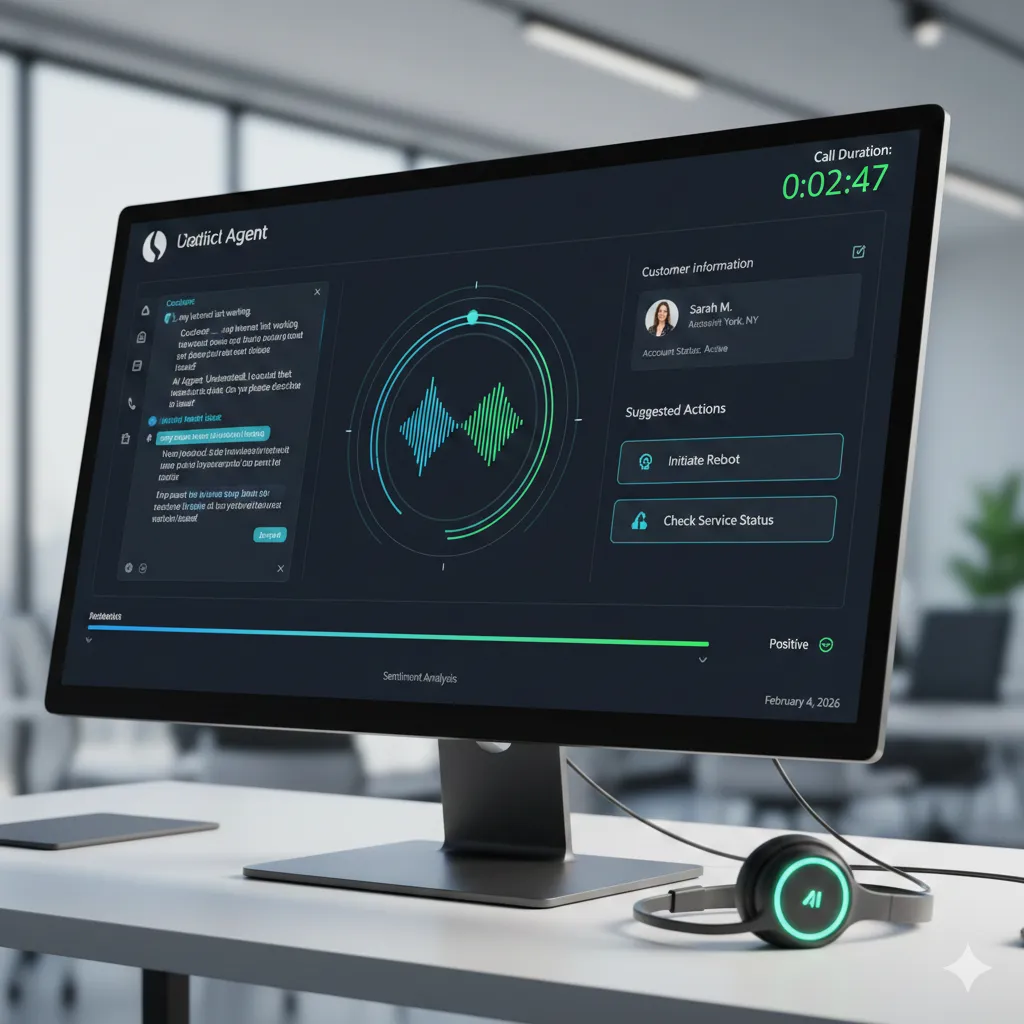
AI automation captures and converts those responses immediately. When someone calls at 7 PM on a Saturday, your AI voice agent answers professionally, answers their questions, qualifies their needs, and books them for an appointment—while your competitors' calls are going to voicemail.
When someone texts your number from the postcard, they get an instant response with helpful information and a link to schedule a consultation.
When someone visits your website, a chat agent engages them immediately, guides them through common questions, and captures their contact information even if they're not ready to book yet.
You've just solved both problems simultaneously. Direct mail creates the traffic. AI captures and converts it. Together, they create a complete lead generation and conversion system.
Real-World Impact: What This Looks Like in Practice
Let's walk through a typical scenario for a Triangle-based HVAC company using this integrated approach:
Monday: A shared-cost EDDM postcard campaign drops in 5,000 homes across Durham neighborhoods with aging HVAC systems. The postcard features the company's spring tune-up special and includes their phone number, website, and text keyword.
Tuesday-Sunday: Responses start coming in:
30 phone calls (15 during business hours, 15 after hours or during jobs)
12 text messages
8 website chat inquiries
With traditional approach: The business would capture maybe 15 of the 30 phone calls (missing the after-hours ones), respond to texts sporadically when someone had time, and likely miss several website chats entirely. Estimated conversion: 40-50% of total responses.
With AI integration: All 30 calls are answered by the AI voice agent. Every text gets an immediate response. Every website chat is engaged instantly. Qualified prospects are routed to appointments automatically. Estimated conversion: 75-85% of total responses.
The difference? The AI-integrated approach books approximately 60% more appointments from the same direct mail investment.
Why Triangle Businesses Are Adopting This Strategy
We're seeing rapid adoption of integrated AI and direct mail across the Triangle and Triad for several practical reasons:
1. It Maximizes Marketing ROI
Direct mail costs haven't decreased—printing, postage, and design all require investment. But when you pair that investment with AI that captures responses you'd otherwise miss, your cost-per-acquisition drops significantly.
You're not spending more on marketing. You're capturing more value from what you already spend.
2. It Levels the Playing Field with Larger Competitors
National chains and franchise operations have 24/7 call centers and instant response systems. Independent local businesses typically don't—which puts them at a disadvantage when competing for the same customers.
AI automation gives small businesses the same "always available, instant response" capability that enterprise competitors have, but at a fraction of the cost.
3. It Works With How People Actually Respond to Marketing
Modern consumers expect immediate responses.HubSpot: Lead Response Time Statistics show that people will contact multiple businesses when researching a service, and they'll often choose whoever responds first and most helpfully—not necessarily who has the best service or lowest price.
Direct mail puts you in front of them. AI ensures you respond faster than competitors.
4. It Provides Valuable Business Intelligence
AI agents don't just respond to leads—they collect data. Every conversation reveals:
Common customer questions (what should be clearer in your marketing?)
Price objections (is your positioning aligned with market expectations?)
Service gaps (what are people asking for that you don't prominently feature?)
Peak inquiry times (when should you concentrate follow-up efforts?)
This intelligence helps you refine both your direct mail messaging and your overall service positioning over time.

How to Implement This Integration for Your Business
If you're a Triangle small business considering this approach, here's the strategic framework:
Step 1: Start with Your Direct Mail Foundation
Launch or optimize your USPS EDDM campaign targeting neighborhoods where your ideal customers live. For shared-cost programs like Wespor's, you split printing and postage costs while maintaining exclusive category placement—making consistent campaigns affordable.
Design your postcards to drive multiple response channels:
Prominent phone number (that goes to your AI agent)
Text keyword for instant information
Website URL with chat integration
QR code for mobile-friendly engagement
Step 2: Deploy AI Response Infrastructure
Set up AI voice and chat agents trained on your specific business:
Your services and pricing structure
Common customer questions and objections
Appointment qualification criteria
Scheduling availability and booking process
Platforms like GoHighLevel integrated with conversational AI tools create unified systems where phone, text, and chat all flow into one place.
Step 3: Create Response Workflows
Map out what happens when someone responds to your direct mail:
AI greets them professionally and determines their need
Qualifying questions assess fit (service area, project type, timing, budget)
High-quality leads are routed to immediate appointment booking
Lower-priority leads enter nurture sequences
All data captures into your CRM automatically
Step 4: Measure, Optimize, and Scale
Track performance metrics:
Total responses by channel (phone, text, chat)
Qualification rates (what percentage are good-fit prospects?)
Conversion rates (responses to appointments to completed jobs)
Time-of-day patterns (when do most responses occur?)
Cost per acquisition across campaigns
Use this data to refine postcard messaging, AI conversation flows, and targeting for future campaigns.
Common Objections (and Why They Don't Hold Up)
"My customers are older and won't want to talk to AI."
Your customers won't know they're talking to AI—modern conversational AI sounds completely natural. More importantly, they care about getting their questions answered and booking an appointment conveniently. AI does that better than voicemail.
"This sounds complicated to set up."
The technology is complex, but the implementation doesn't have to be. Platforms designed for small businesses handle the technical integration—you just provide information about your services and let the system do the work.
"I can't afford both direct mail and AI technology."
Shared-cost direct mail programs make postcards affordable (often $300-600 per campaign). AI agents start at around $200/month. Combined, that's often less than hiring even a part-time receptionist—but with 24/7 availability and perfect consistency.
"I prefer the personal touch."
AI doesn't replace personal service—it enables more of it. By handling initial contact, qualification, and scheduling, AI frees you to spend more personal time actually serving customers instead of playing phone tag.
The Competitive Window Is Open (But Closing)
Here's the strategic reality: right now, most of your local competitors aren't using this integrated approach. They're doing either direct mail OR digital marketing, but not both in a coordinated system.
That gives early adopters a significant competitive advantage.
But this window won't stay open forever. As more businesses recognize the effectiveness of AI-integrated direct mail, it will become table stakes rather than a differentiator.
The businesses that implement this now will have refined their systems, optimized their messaging, and built market share before their competitors even start.
Your Next Step
If you're a Triangle or Triad small business competing for local customers—whether you're in home services, professional services, wellness, real estate, or any field where local presence matters—the AI and direct mail integration is worth serious consideration.
It's not about chasing the latest marketing trend. It's about using proven channels (direct mail) more effectively by solving their biggest limitation (delayed response) with modern technology (AI automation).
The businesses winning in local markets aren't necessarily the ones with the best service or the lowest prices. They're increasingly the ones with the best systems for capturing and converting opportunities.
Make sure your business is one of them.
Ready to connect with other growth-minded Triangle business owners? Wespor Business Marketing hosts regular networking events designed to foster genuine relationships and business growth. Our events provide structure without stuffiness—a perfect environment for business owners who value authentic connection. Plus, learn how our shared-cost postcard marketing can help you reach thousands of local potential customers efficiently. Visit wesporbusiness.com to see upcoming events and discover how we support local business growth. Call (984) 217-4555 to learn more.


